
Despite the existence of The Sexual Offences Act 20161, it is the recommendation of this Evidence Report that the Kenyan government and law enforcement agencies operationalize the act to ensure its efficacy. It defeats the purpose of having a strict law if it only exists on paper. This report therefore recommends more stringent action from the Kenyan Police on cases of sexual harassment and sexual abuse, as well as greater accountability from judicial officers and paralegals in following up on cases.
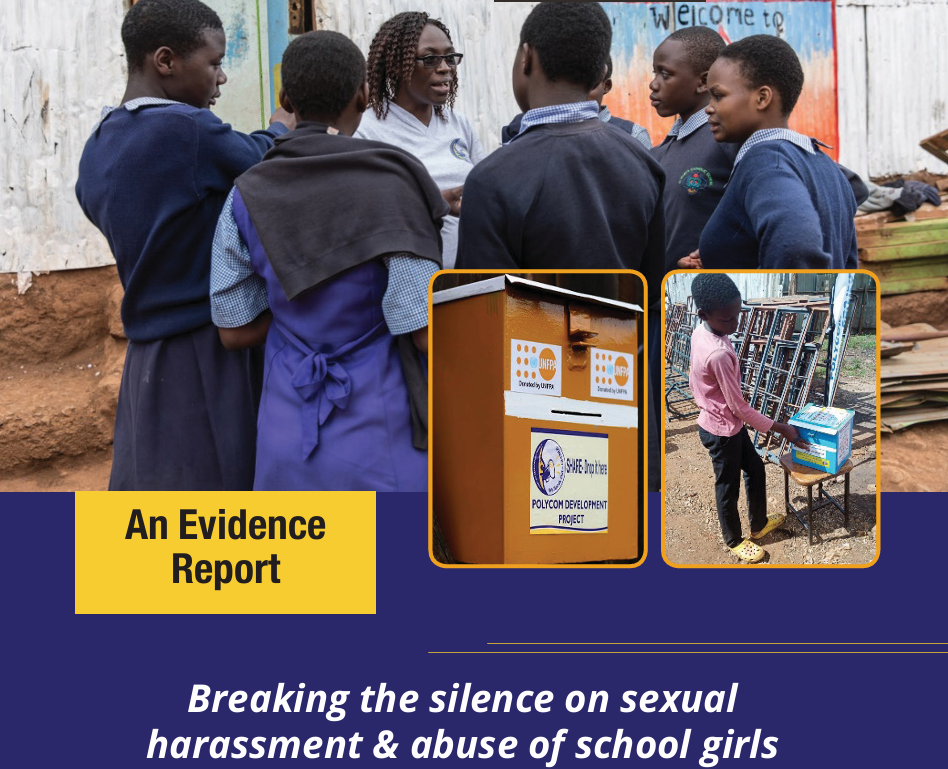
This Policy Evidence Report brings into focus the reality of the devastating ravages of sexual harassment and abuse meted out against Adolescent girls and children from Kibera. Data from the Talking Boxes at the 20 supported schools indicates that 19% (564) of the 3,021 notes shared were related to sexual harassment and abuse. It shows the urgency for intervention, and need for the streamlining of justice and safety mechanisms to ensure that girls are protected. This report calls on duty bearers who include the Kenyan Police, County, Sub county, village administration officers, the judiciary and stakeholders to take up their responsibilities and close the gap for offenders. This report also recommends an active, vigilant and proactive education safety mechanism in schools for children, especially adolescent girls from vulnerable communities.
It is paramount that the needs, fears of, and threats to adolescent girls in education becomes a priority for our schools’ system, the teaching staff and within school governance processes. For the many adolescent girls who are at risk of sexual harassment and abuse in their homes, schools become their shelter.
However, and ironically to some, even in school the threats of sexual harassment and abuse still persist. It is also the duty of the community at large: the community-based workers, civil society, and community mobilisers, to be alert to the fact that girls are vulnerable to sexual harassment and abuses everywhere. Only in this way, will we be able to form a protective shield that looks out for the safety and wellness of our girls, and in turn remand perpetrators for prosecution as a deterrent to sexual harassment and sexual abuse. This Evidence Report de-bunks social norms that protect perpetrators of sexual harassment and abuse.
The report instigates behavior change that would decrease the risk to adolescent girls from perpetrators. Whilst it may be the first Evidence report pushing forth the findings of the “Talking Boxes”, it will not be the last. The “Talking Boxes’’ could be the only platform of breaking the silence on sexual harassment and abuse for adolescent girls, therefore it is our intention as Polycom Development Project to implement our “Talking boxes” beyond Kibera as it is imperative that these safe spaces are available for adolescent girls